In 1945, Henry L. Stimson, aged seventy-seven, held a position of extraordinary influence within the U.S. government. As Secretary of War under Presidents Roosevelt and Truman, he oversaw the Manhattan Project and helped shape the deliberations surrounding the use of the atomic bomb—a weapon that would forever change the world.
That May, a targeting committee considered Japanese cities whose military and industrial importance, size and vulnerability would make an atomic attack devastating. Among them was Kyoto, Japan’s ancient capital and a centre of its art, learning and religious life.
Stimson supported using the atomic bomb, but insisted that Kyoto be spared. He argued that destroying such a cultural treasure would leave lasting bitterness and undermine reconciliation after the war. With Truman’s support, Kyoto was removed from the atomic target list.
He had visited Kyoto before the war. Whatever part those visits played in his decision, I find something deeply human in the image of a place once encountered and later defended—a city that had become more than a name on a map.
My own life has been an accidental journey through many such Kyotos.
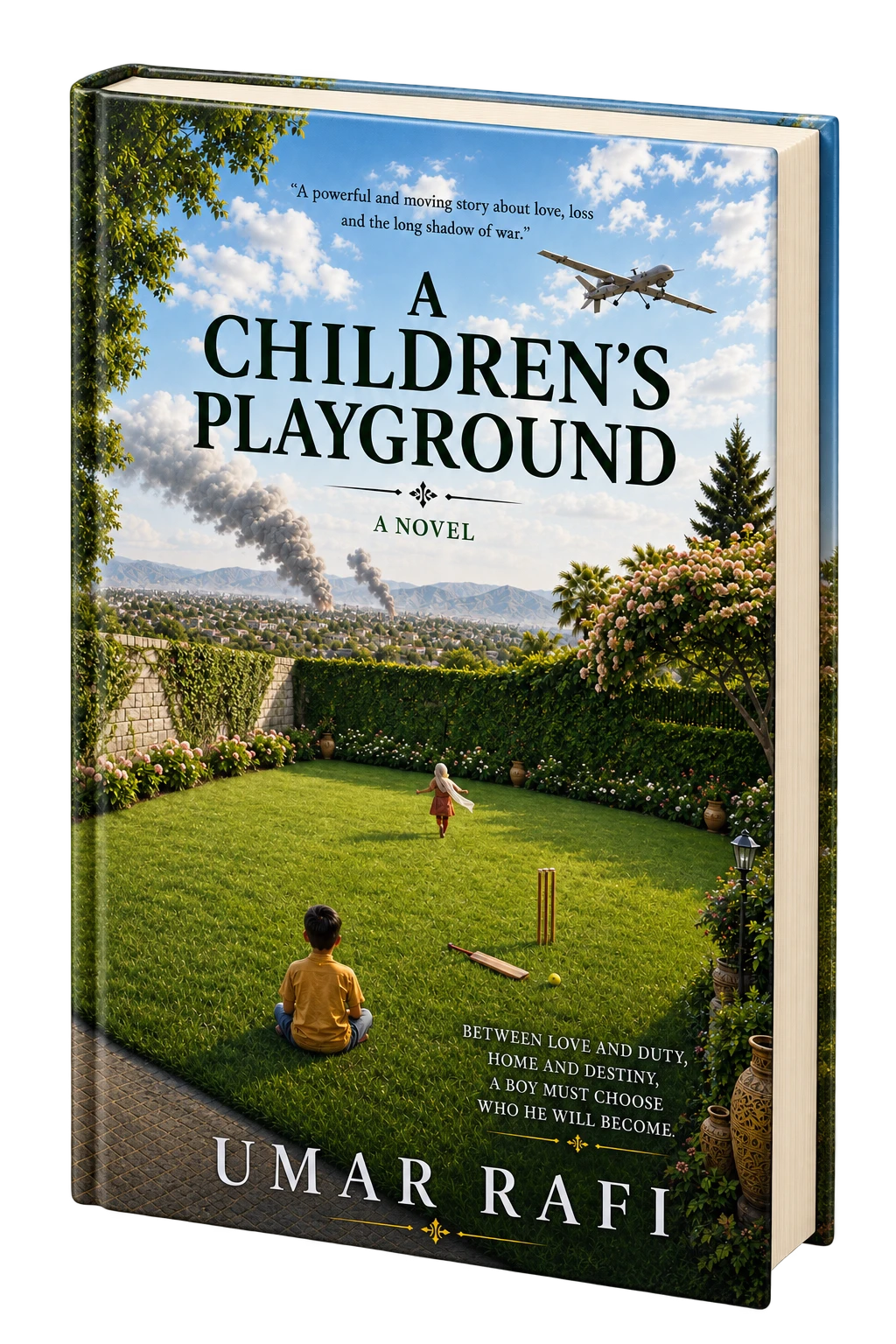
Two decades ago, I set out to write A Children’s Playground. Over those years, my adult life took me through seven countries: Pakistan, my country of birth; Canada, my country of citizenship; the United States, my country of residence; the UAE, Saudi Arabia, Lebanon and Malaysia. These were not simply places I visited, but worlds in which I lived, worked and formed friendships.
I also lived in Iraq as a toddler for a year and a half, with recollections of the modern city of Baghdad preserved through my parents’ photographs and stories. My father, in his thirties, loved to connect history with objects and lands. Our family frequently journeyed to the sacred city of Karbala, and we explored the historic city of Samarra, sadly marred by destruction during the recent Iraq War.
Seventeen years later, the United States Air Force Academy granted me a distinctive scholarship, an honor bestowed upon only ten foreign students annually. This remarkable opportunity afforded me an inside view of the U.S. military. I flew and jumped out of airplanes with future U.S. Air Force officers, forming lifelong friendships. Among my classmates, I now count individuals who held command positions within the U.S. military during the Afghan, Iraq and Iran wars.
I had the opportunity to share my college living space with a Jewish roommate who was regularly engaged in his religious community's activities, providing me with unique insights into his faith. While pursuing a master's degree, I had an Indian-American Hindu graduate advisor in his thirties. Our academic interactions were frequently laced with conversations weaving the threads of our common Punjabi heritage. For my Ph.D. dissertation, I was guided by a septuagenarian Shia Muslim Iranian-American professor who was a globally renowned researcher in finance and a recognized Islamic scholar.
Interestingly, after completing my initial degree in the USA at twenty-three, I stood at the precipice of adopting atheism. Twenty-five years later, back into the fold of religion, I authored a book on Islamic finance.
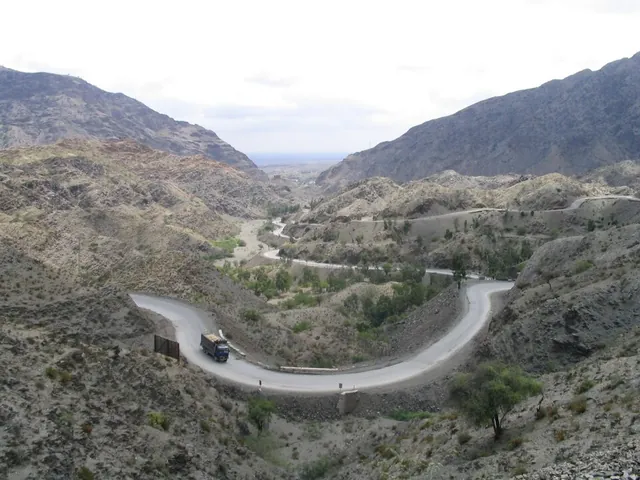
During our time in Iraq, a family road trip took us from Najaf—the burial place of Imam Ali ibn Abi Talib—through Kuwait and vibrant Tehran to an inn in Kabul, remembered in my parents’ stories for its colourful music and food. We continued through the historic Khyber Pass and travelled the length of Pakistan to Karachi.
Perhaps it was a time of innocence, when two parents in their thirties could decide, on a whim, to cross those lands with three small children, trusting in the welcome beyond the next border. Looking back, I think of how much war has taken—not only lives and homes, but the ease with which a family could imagine such a journey.
A decade later, I found myself in the backseat of a car, much like Asad in A Children’s Playground years later, “captivated by the world passing by, staring outside with my nose plastered against the car window,” as we drove from Orlando to New York, from Disney World to the Statue of Liberty.
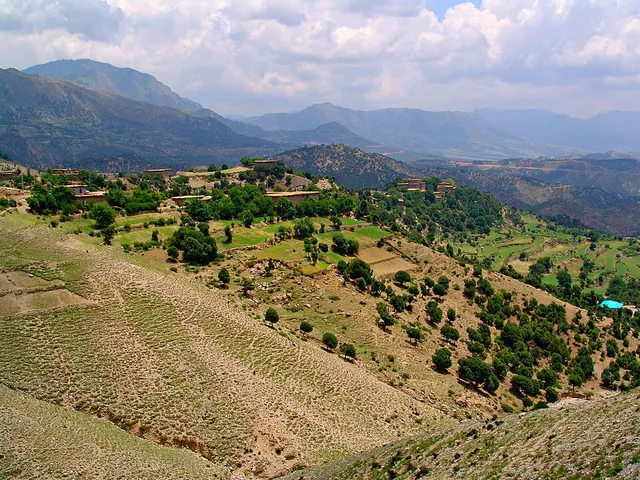
During my teenage years, I regularly travelled to remote regions of Pakistan, through villages shaped by long histories, along broken roads in crowded buses, with passengers sometimes riding on the roof.
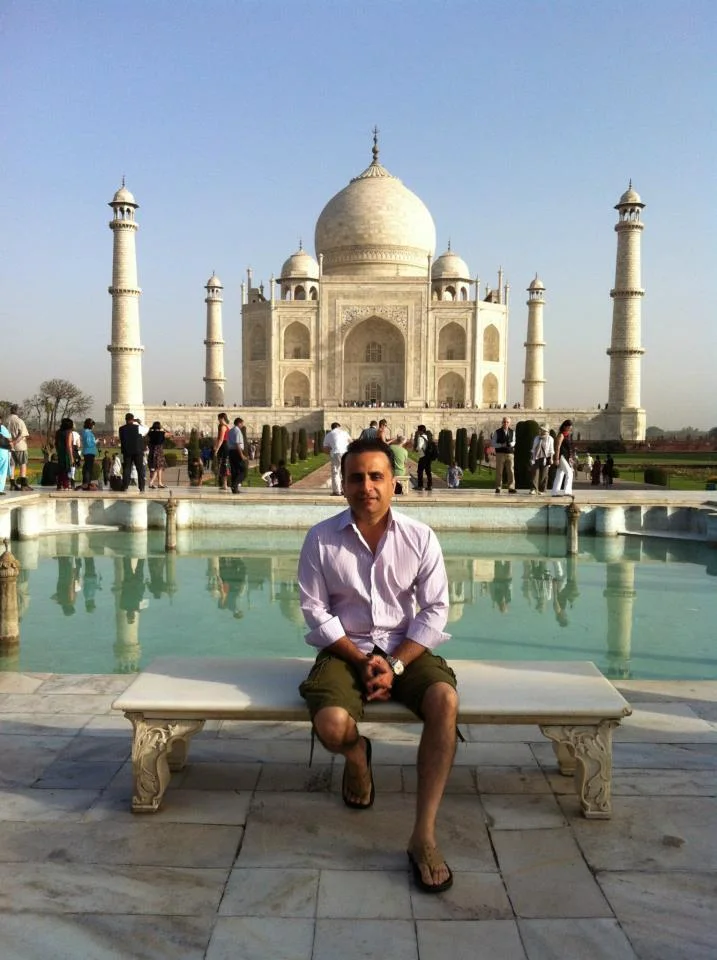
Along the way, I visited numerous Hindu temples in India, from Jaipur to Ooty. I spent an entire day at the Darbar Sahib Gurdwara in Amritsar, serving food in the langar (communal kitchen), walking into the Golden Temple, listening to verses from Guru Granth Sahib, and trying to understand a religion deeply connected to my native language.
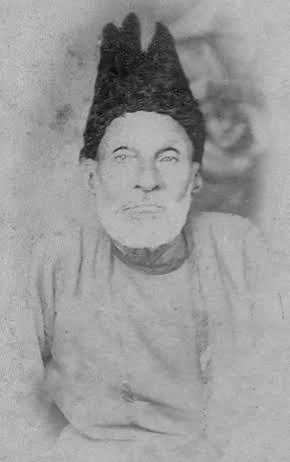
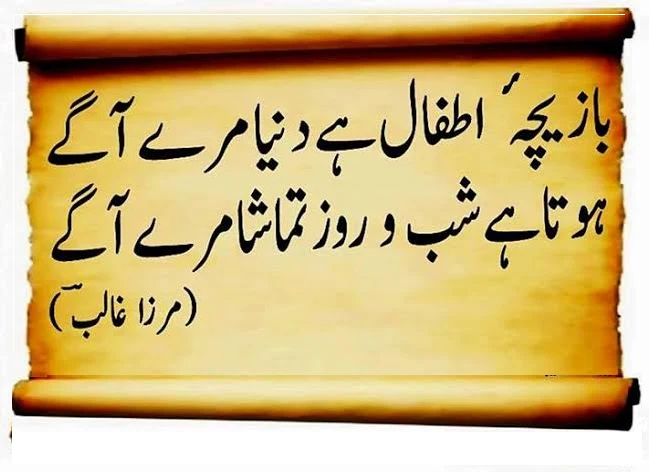
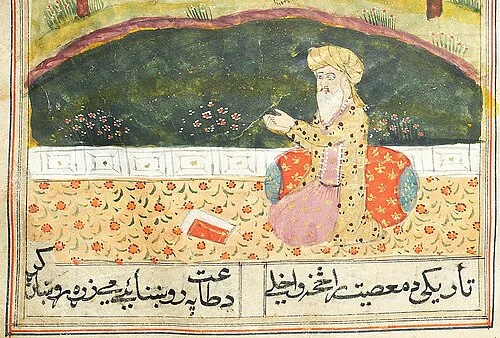
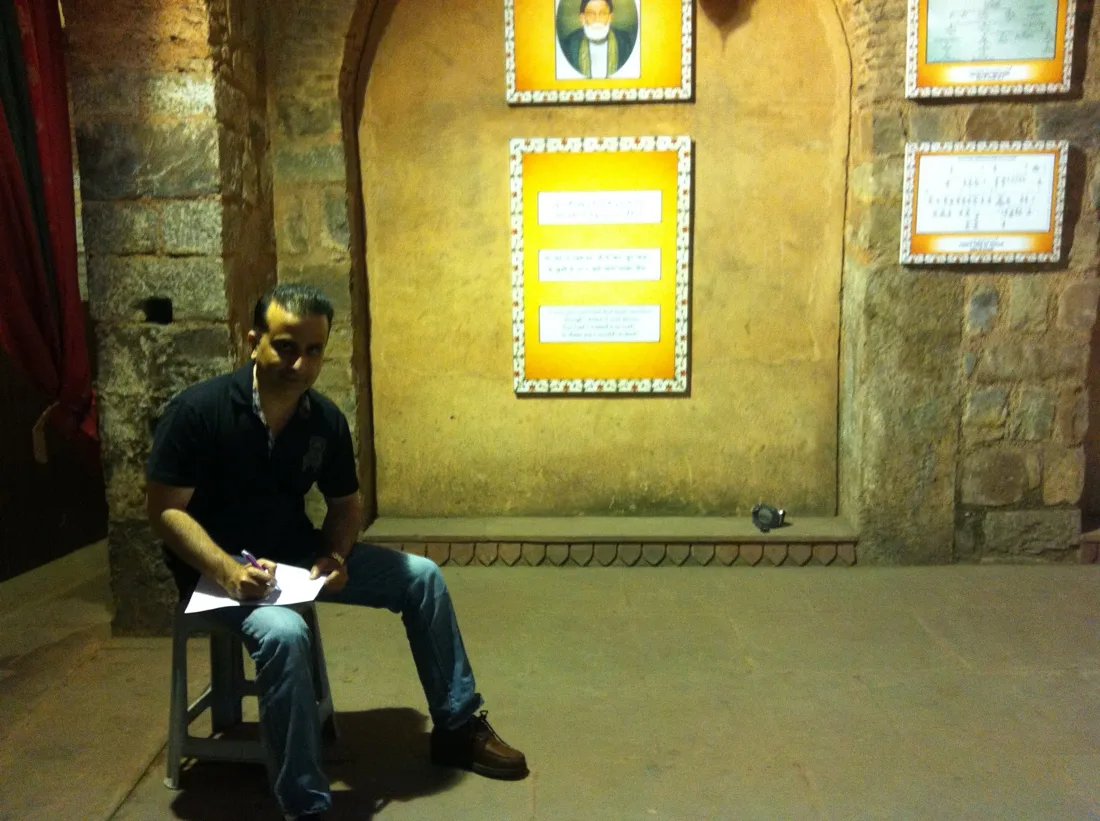
Two weeks later, in Delhi, I poured my heart into translating Bazeecha-e-Atfal (A Children’s Playground), the poem that gives my novel its title, from its original Urdu into English while sitting inside the historic residence of my favorite poet, Mirza Asadullah Khan Ghalib.
My father and five uncles fought in the 1965 and 1971 India-Pakistan wars. My father found himself launching air raids on airfields in cities where he had spent his pre-Partition teenage years a mere eighteen years earlier. Until the end of his life, he wanted to visit those cities to rekindle his childhood memories, yet he could not do so due to strict visa restrictions. Ironically, his only post-Partition visits to those cities were limited to the cockpit of his bomber airplane during the two wars.
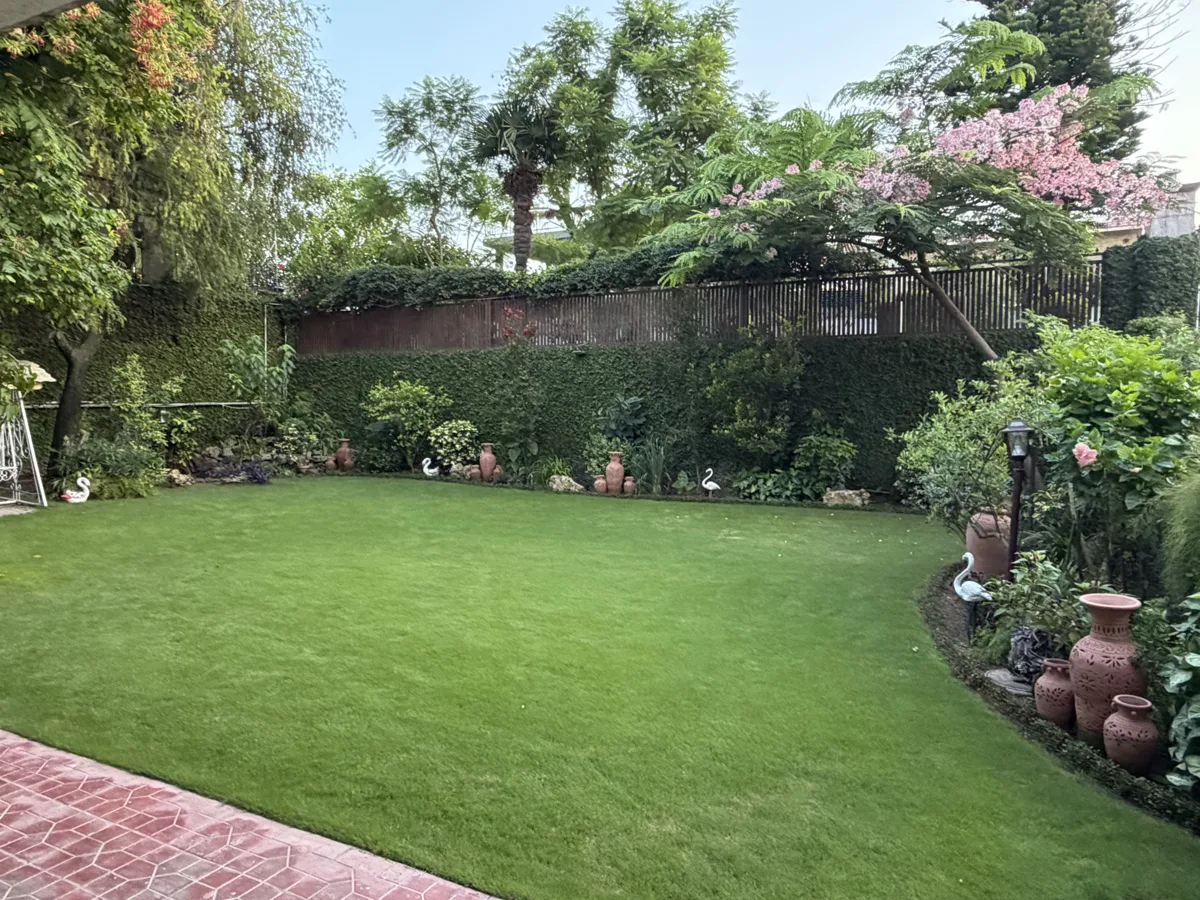
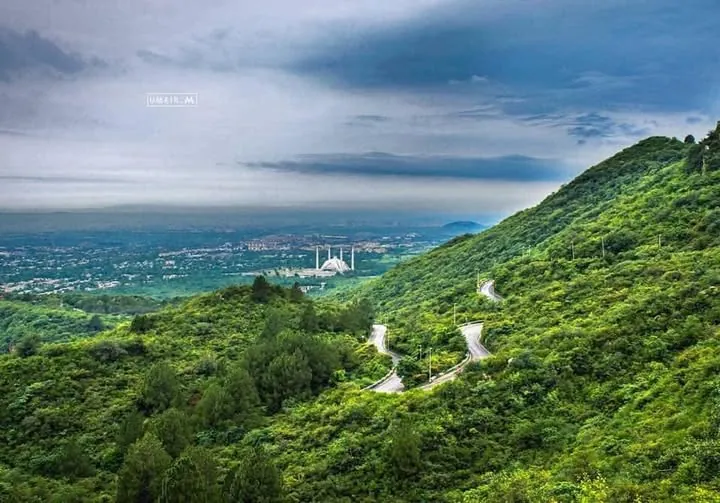
Growing up in Islamabad, I observed the Soviet-Afghan War unfold before my home (standing in the playground that inspired this book). I saw injured and orphaned, poor Afghan refugee children housed in a newly constructed neighboring madrassah (across the street from the house with the big Alsatian). Decades later, as an adult, I observed the NATO-Afghan War from that very same playground, watching the ordeal of the next generation of injured and orphaned, poor Afghan refugee children. This time, the misery was augmented with injured and orphaned Pakistani children (children like Samina in A Children’s Playground).
That playground, and the generations of children who passed through its world in the shadow of different wars, eventually gave A Children’s Playground its name.
I was in Riyadh during the Arab Spring and Beirut during Lebanese-Israeli skirmishes.
Across these experiences, I found kindness that crossed religions, races and nationalities, even as conflict divided the communities to which those same people belonged. Why do compassionate, well-meaning people find themselves on opposing sides of a war? That question stayed with me and helped give this novel its shape.
Many of its characters carry echoes of lifelong friends on different sides of those divides: Mark Mannings and Saminas, Rahman Babas and Annas, Johans and Fakhars. Their humanity was familiar to me long before I tried to understand the conflicts that placed them apart.
During the Afghan War, some of my American friends carried out bombings, while some of my Afghan friends found themselves beneath those same bombs. Knowing them as individuals, I struggle to reconcile the distance between their worlds with the humanity they share. I have eaten Big Macs with the former and drunk chai with the latter throughout my adult life. I believe that if they met around the same table, many would enjoy one another’s company, as I have enjoyed theirs, and might part as friends.
So, what should we do?
In my opinion, the greatest gift one can give someone is to make them laugh and to make them think. I hope this book makes you laugh and, more importantly, makes you think—that it takes you beyond your comfort zone and challenges your understanding of right and wrong in the wider world. I hope it also encourages you to examine the judgments we inherit from governments, the media and our own communities.
It is easy to dislike people we have never met, or fear places we have never visited. Familiarity does not guarantee compassion, but it gives us something that distant narratives often cannot: a face, a voice, a memory. A place where we once felt welcome is harder to see as merely a target; someone whose table we have shared is harder to dismiss as an enemy.
If you wield the power of life and death over another person, you owe them the effort of seeing their life as fully as you can. Share a meal, listen to a story, learn something of the world they call home. Such encounters may not settle a conflict, but they can make it harder to mistake a human being for an abstraction.
In Mashal’s words, “How will you ever do anything if you don’t know anything?”
When I submitted the manuscript of this book for initial reviews, my intent was to ensure it was concurrently assessed by friends hailing from countries and groups that have been at odds with each other–Americans and Russians, Indians and Pakistanis, Jews and Muslims, Pashtuns and Tajiks, Serbs and Croats, Shias and Sunnis, to mention a few. I aimed to determine whether they could grasp the book's core message despite the constant barrage of opposing narratives from their respective media and leaders. Without exception, each one of them understood the essence of the message.
In that sense, this book is for those courageous enough to place their faith in the common human ideal—hope; those who endeavor to see the enduring individual virtues of others, irrespective of collective national faults; those who are ready to forgive, convinced that one day humanity will find its shared North Star even if we repeatedly wander off the path. It is a book for the optimists among us.
I must thank all my friends who spent time reviewing and commenting on my book, line by line—a task I have personally found far too tedious to undertake for others. Any wisdom and insights in this book are yours, while all errors and oversights are mine.
Shukriya. Dhanyavaad. Hvala. Spasibo. Mulțumesc. Shukran. Mannana. Toda. Dhonnobad. Merci. Thank You.
To you, the reader, I offer my sincere gratitude for taking the time to read this book, with the hope that you may embark on your own personal Kyoto adventure.