English was the language of my schooling, my training and most of my working life, and its poets came to me as a third inheritance, alongside the Urdu and Punjabi I grew up with. Reading them beside Ghalib and Bulleh Shah, I was struck less by the differences than by how often they were asking the same questions. These are the five English poets I return to most, counted down from five to one.
5. Rudyard Kipling30 December 1865 – 18 January 1936
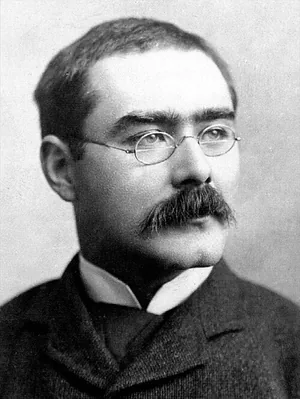
Kipling is the English poet who knew my part of the world. He was born in Bombay, worked as a young man in Lahore, and wrote of the Punjab, its soldiers and its bazaars with an intimacy no other English poet matched.
He was born in 1865 to John Lockwood Kipling, an artist and teacher who later ran the Mayo School of Art and the museum in Lahore. At five he was sent to England, to an unhappy foster home and then to the United Services College in Devon, where he discovered literature. At sixteen he returned to India to work on the Civil and Military Gazette in Lahore, and the stories and verses he wrote there made him famous. He later settled in England and, in 1907, became the first English-language writer to receive the Nobel Prize in Literature. He died in London in 1936.
His poems include the soldiers’ ballads of Barrack-Room Ballads, The Ballad of East and West, Recessional and the most quoted poem of advice in the language, If—, which every young cadet seems to meet sooner or later:
If you can keep your head when all about you
Are losing theirs and blaming it on you…
His contribution was to bring the rhythms of ordinary speech, of soldiers, sailors and workers, into English verse, and to make poetry popular in the best sense: remembered, recited and loved by people who did not think of themselves as readers of poetry. His fiction, including The Jungle Book and Kim, carried India into the imagination of the world. Kim opens in Lahore before following its characters across northern India.
He is at number five because his gifts came bound up with the attitudes of empire, and some of his verse is hard to read today. But he wrote about the Punjab as no outsider had before, and Kim, with the great gun still standing outside the Lahore Museum, is as much a part of Lahore’s story as of his.
4. T. S. Eliot26 September 1888 – 4 January 1965
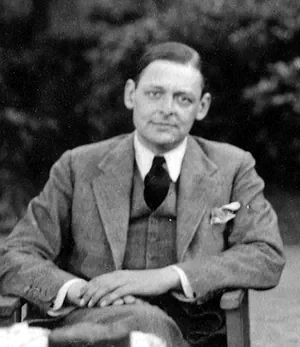
Eliot changed what a poem could be. In the aftermath of the First World War, he wrote poetry that sounded like the modern world: broken, crowded with voices, haunted by the past and searching for meaning.
He was born in St Louis, Missouri, in 1888, and studied philosophy at Harvard, in Paris and at Oxford. He settled in London, where for eight years he worked in the foreign department of Lloyds Bank, writing poetry in the evenings, before joining Faber and Gwyer in 1925, the firm that became Faber and Faber in 1929. He became a British subject in 1927, received the Nobel Prize in Literature in 1948, and died in London in 1965.
The Love Song of J. Alfred Prufrock and The Waste Land made his name; Four Quartets, composed from the mid-1930s through the Second World War, is his masterpiece of reflection. Its closing lines could have been written for anyone who has lived in many countries:
We shall not cease from exploration
And the end of all our exploring
Will be to arrive where we started
And know the place for the first time.
His contribution was to make English poetry modern. He wove together quotation, myth and many languages, and ended The Waste Land with words from the Upanishads (ancient Hindu scriptures), drawing East and West into the same poem. He showed that a poem could reflect the fragments of a civilisation and still reach for wholeness. As a critic, he reshaped how a generation read the poets before him.
He is at number four because, for all his brilliance, he is a poet to be studied as much as felt. The three poets above him speak more directly to the heart, and their language has entered everyday speech in a way his has not.
3. William Wordsworth7 April 1770 – 23 April 1850
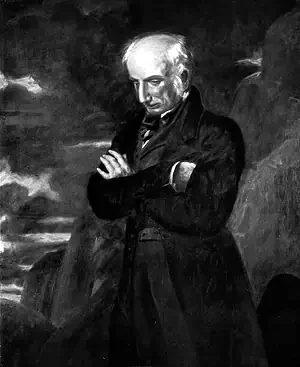
Wordsworth taught English poetry to look at the world with fresh eyes. He believed that nature, memory and the lives of ordinary people were worthy of the highest art, and he helped begin the Romantic movement that changed literature across Europe.
He was born in Cockermouth, in the Lake District, in 1770. His mother died when he was seven and his father when he was thirteen, and he was sent to school at Hawkshead, where the hills and lakes became his true teachers. He studied at St John’s College, Cambridge, walked across France at the height of the Revolution, and returned to England full of political hope and later disappointment. He spent most of his life in the Lakes with his sister Dorothy, became Poet Laureate in 1843, and died at Rydal Mount in 1850.
With Samuel Taylor Coleridge he published Lyrical Ballads in 1798. The preface, added in 1800 and expanded in 1802, called poetry “the spontaneous overflow of powerful feelings” that “takes its origin from emotion recollected in tranquillity”. His long autobiographical poem, The Prelude, traces the growth of a poet’s mind. And his daffodils are known to every schoolchild:
For oft, when on my couch I lie
In vacant or in pensive mood,
They flash upon that inward eye
Which is the bliss of solitude.
His contribution was to bring poetry down from formal heights into the language of ordinary life, and to make memory and the natural world its great subjects. In this he is closer than any English poet to the Sufi poets of Punjab, who also found the divine in the simple and the near.
He is at number three because the two poets above him did something larger still: one gave English its epic, and the other gave it almost everything else.
2. John Milton9 December 1608 – 8 November 1674
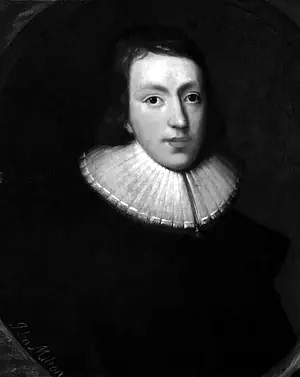
Milton wrote the great epic of the English language, and he wrote it blind. Paradise Lost took on the largest subject imaginable, the fall of humanity, and gave English poetry a grandeur it had never had before.
He was born in London in 1608 and educated at St Paul’s School and at Christ’s College, Cambridge. He spent years in private study, reading in many languages, and travelled through Italy, where he met the aged Galileo. During the English Civil War he became a fierce writer of pamphlets, and in Areopagitica made one of history’s great arguments for a free press: “Give me the liberty to know, to utter, and to argue freely according to conscience, above all liberties.” He served Cromwell’s government as Secretary for Foreign Tongues, went completely blind by 1652, and after the Restoration dictated Paradise Lost to family and friends. He died in London in 1674.
Paradise Lost, published in 1667, tells the story of Satan’s rebellion and the fall of Adam and Eve, in blank verse of enormous power. Its most famous character is Satan himself, who speaks some of its most unforgettable lines:
The mind is its own place, and in itself
Can make a Heav’n of Hell, a Hell of Heav’n.
His contribution was to show that English could carry an epic to rival Homer, Virgil and Dante, and to defend, in poetry and prose, the freedom of conscience and of speech. Readers of Iqbal will recognise something familiar: Iqbal, too, gave Iblis some of his boldest lines, and both poets used the fallen angel to think about pride, freedom and the human will.
He is at number two because the poet at number one is not only the greatest English poet but, for many, the greatest writer in any language.
1. William ShakespeareBaptised 26 April 1564 – 23 April 1616
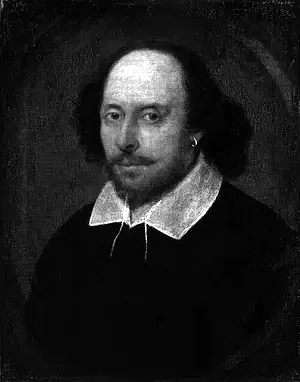
Shakespeare needs no introduction, and that is the measure of him. Four centuries after his death, his plays are performed in every country, his characters are part of how we understand ourselves, and his words are spoken every day by people who have never read him.
He was baptised in Stratford-upon-Avon in 1564, the son of a glove-maker who became a town official, and was educated at the local grammar school, where he learned Latin and the classics. At eighteen he married Anne Hathaway, and a few years later he appeared in London as an actor and playwright. With the Lord Chamberlain’s Men, later the King’s Men, he wrote for the Globe Theatre, and over some twenty-five years produced around thirty-eight plays and 154 sonnets. He retired to Stratford, where he died in 1616; his friends gathered his plays into the First Folio seven years later.
His work ranges from the comedies to the histories to the great tragedies, Hamlet, Othello, King Lear and Macbeth, and his sonnets are among the finest love poems in the language. One of his best-known speeches could almost be a translation of Ghalib:
All the world’s a stage,
And all the men and women merely players;
They have their exits and their entrances…
His contribution is almost impossible to measure. He shaped the English language itself, giving it thousands of words and phrases, and he created characters so complete that they seem to live outside the page. His plays travelled to South Asia early: Urdu and Hindustani adaptations filled the Parsi theatres of the nineteenth century, and the playwright Agha Hashar Kashmiri was called the Shakespeare of India. For the world, he is the writer who understood human nature most fully, its ambition, jealousy, love and grief.
He is at number one because no other poet, in any of the four languages of this series, has seen so much of life so clearly. Ghalib saw the world as a children’s playground; Shakespeare saw it as a stage. Between them, I think, they said most of what there is to say.