Antifragility
The book asks how a financial system might absorb and even benefit from unpredictable shocks, rather than depend on their absence.
A BOOK BY UMAR RAFI · 2018
The Risk-Sharing Alternative
What if financial systems could benefit from uncertainty rather than merely withstand it? This book examines risk-sharing in Islamic finance as a foundation for an antifragile alternative to debt-based finance.
Through a model of 100% equity-based finance, Umar explores how shared risk and skin in the game can align responsibility with reward, questioning how the systems we build respond to shocks.
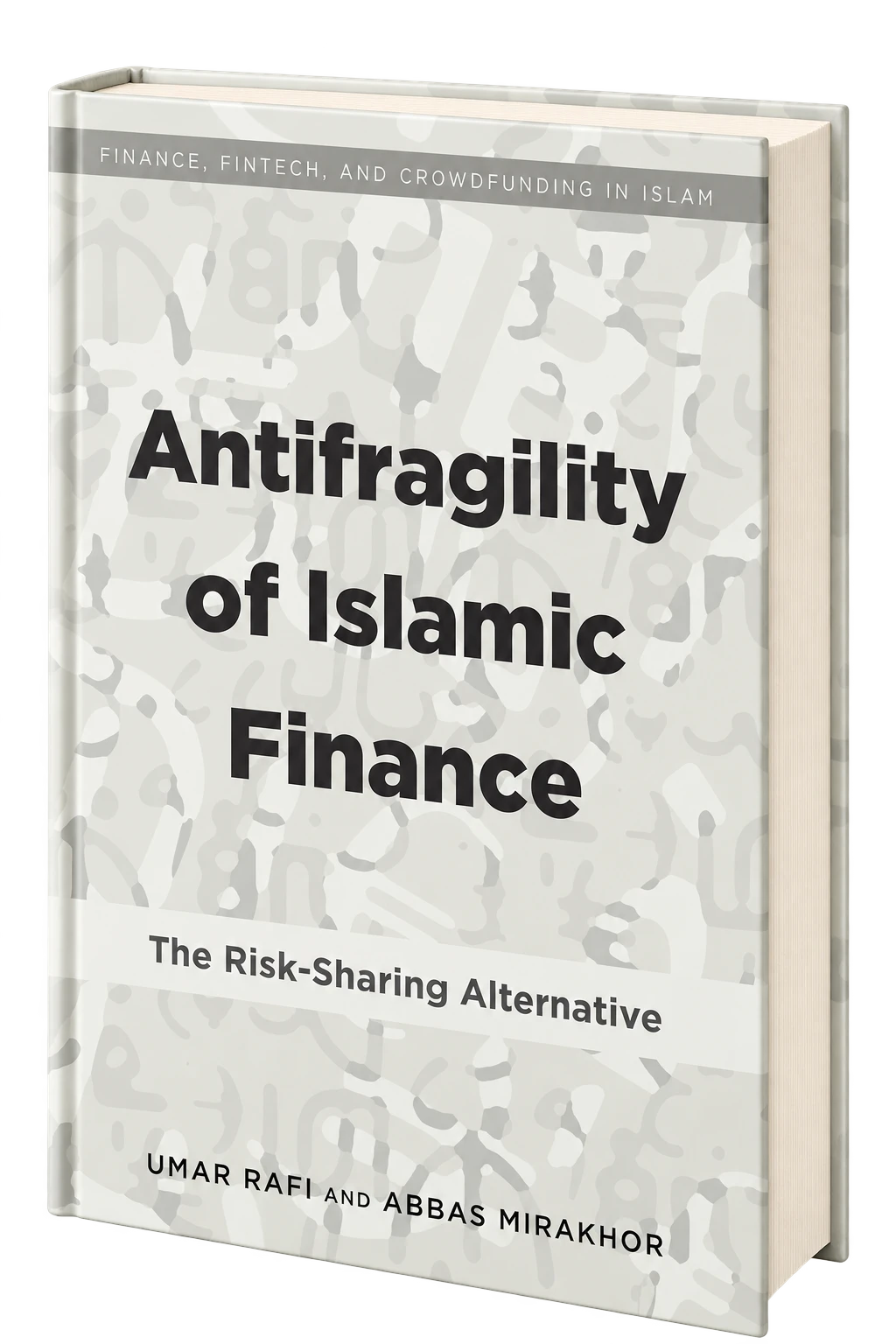
Antifragility of Islamic Finance: The Risk-Sharing Alternative explains how risk-sharing, as defined under Islamic finance, makes financial systems antifragile. It highlights the benefits of 100% equity-based finance over debt-based finance.
The recent financial crisis has given rise to discussions on a new approach to risk management called antifragility. This concept specifies conditions under which systems become resilient to shocks caused by Black Swans—highly unpredictable outlier events that have a major negative (or positive) consequence when they occur, with their occurrence only explained retrospectively. Per this concept, the long-term survivability of any system centers exclusively on its antifragile nature, that is, its ability to absorb and even benefit from Black Swan–type shocks. This book aims to investigate risk-sharing Islamic finance as an antifragile system.
As a by-product of the Great Recession, the problems of debt-based financial systems are starting to be highlighted by industry and by academia. The antifragile solution for avoiding future financial crises is primarily centered on moving the existing financial system towards more equity and less debt, thereby introducing skin-in-the-game into financial transactions. This book introduces a model of a 100% equity-based financial system, centered on risk sharing, as a possible alternative to the contemporary debt-based, conventional financial system, which is based on risk transfer and on risk shifting. In essence, this book attempts to provide a practical model for an antifragile financial system by evaluating the characteristics of Islamic finance under the criteria of antifragility.
The book asks how a financial system might absorb and even benefit from unpredictable shocks, rather than depend on their absence.
Its proposed alternative centers on sharing financial outcomes, examining equity participation alongside the limitations of risk transfer and risk shifting.
The 100% equity-based model connects participation in rewards with exposure to risk, making incentives and responsibility part of the same transaction.
PUBLISHED · 2018
The Risk-Sharing Alternative
Explore the published book and available formats on Amazon.
View on Amazon →